If you are shopping for fine jewelry today, you are not choosing only between beauty and price. You are choosing how something is made, what it represents, and how it fits into your life. Many people arrive here after seeing terms like moissanite diamond or lab alternatives and feeling unsure about what is real and what is not.
Diamonds are no longer defined only by geology. Technology has changed how stones are created and sold. This shift gives you more control but also more responsibility to understand what you are buying.
How diamonds came to be defined
For most of history, diamonds meant stones formed deep underground. They were mined, cut, and sold as symbols of permanence. Their value came from rarity and the effort required to extract them.
That definition started to change when science learned how to replicate the conditions that form diamonds. The result is a stone with the same structure, hardness, and optical behavior as a mined diamond. This is where modern confusion often begins.
What lab grown diamonds actually are
Lab grown diamonds are real diamonds by every physical and chemical standard. They are not imitations and they are not substitutes. They are carbon crystals formed under controlled conditions instead of underground.
The process can take weeks instead of millions of years. The outcome is a diamond that behaves the same in daily wear, cutting, and setting.
You can verify this through certification. Reputable stones are graded by the same labs that grade mined diamonds. The report will clearly state how the diamond was grown.
Why this matters to you
You are not just buying a stone. You are buying predictability.
When a diamond is grown in a lab, variables like clarity and color can be managed. This often results in stones with fewer inclusions and more consistent appearance.
This does not make them better by default. It makes them easier to evaluate.
Where moissanite fits into the picture
Moissanite is a different gemstone. It is not a diamond and it does not claim to be one. It has its own chemical makeup and optical behavior.
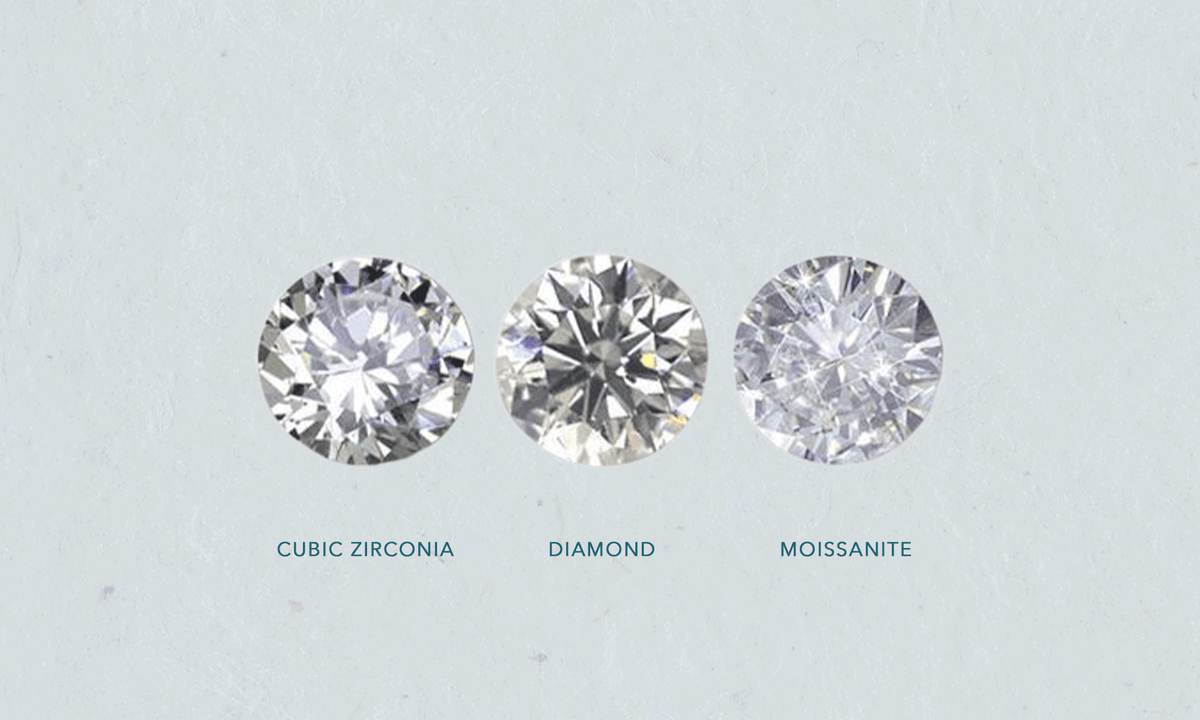
The confusion happens because moissanite looks similar at a glance and is often compared directly to diamonds. Some sellers use blended language like moissanite diamond which adds to the uncertainty.
Moissanite reflects light differently. It has more fire and less depth. Some people enjoy this. Others find it looks artificial under certain lighting.
Practical example
If you place a moissanite ring and a diamond ring side by side under bright lights, the moissanite may appear more sparkly. In softer light, the diamond often looks calmer and deeper.
Neither response is wrong. It depends on what you value visually.
Cost differences and what you are paying for
Price is often the first question. It should not be the last.
Lab grown diamonds usually cost less than mined diamonds of similar size and grade. The reduction comes from production efficiency, not quality loss.
Moissanite costs significantly less than both. That difference reflects material rarity and market demand.
Ask yourself what the price represents to you.
- Is it about size and visual impact?
- Is it about long term value?
- Is it about symbolism?
Your answer changes which option makes sense.
Durability and daily wear
If you plan to wear a ring every day, durability matters.
Diamonds rank highest on the hardness scale. Lab grown diamonds share this property. They resist scratching and maintain polish over time.
Moissanite is also very hard and suitable for daily wear. It is not fragile. The difference appears over many years, not months.
For most people, all three options will last a lifetime with basic care.
Ethics and transparency
Many buyers care about where their jewelry comes from. This is not about trends. It is about alignment with personal values.
Lab grown diamonds offer traceability. You know where they were made and under what conditions. This reduces uncertainty tied to mining practices.
Moissanite is also lab created which removes mining concerns entirely.
If ethical sourcing matters to you, clarity in the supply chain is often more important than the category of stone.
How to choose without regret
The best choice is the one you understand fully.
Do not rely on labels alone. Ask direct questions. Request certification. Look at stones in different lighting. Take your time.
Here is a simple way to narrow your decision:
- Choose lab grown diamonds if you want a true diamond with modern sourcing.
- Choose moissanite if you value brightness and lower cost over tradition.
- Choose mined diamonds if geological origin matters deeply to you.
None of these choices are upgrades or downgrades. They are different solutions to different needs.
Common buying mistakes to avoid
Most mistakes come from assumptions.
One common error is assuming visual similarity equals material identity. Another is assuming lower price means lower integrity.
Avoid rushing because of a deadline or pressure. Jewelry lasts longer than any sales conversation.
FAQ
Are lab grown diamonds considered real diamonds?
Yes. They share the same structure, hardness, and grading standards as mined diamonds.
Will a jeweler be able to tell the difference?
Only with specialized equipment or documentation. To the eye, they appear the same.
Is moissanite a good long term option?
Yes if you like its look and understand it is a distinct gemstone, not a diamond.